Korean Typography
Consonantal and vowel forms across vector,
animation, and print. Sequence deliberately
unordered: the letter treated as form, not text.
Year
2018–2023
Medium
Vector, animation, print
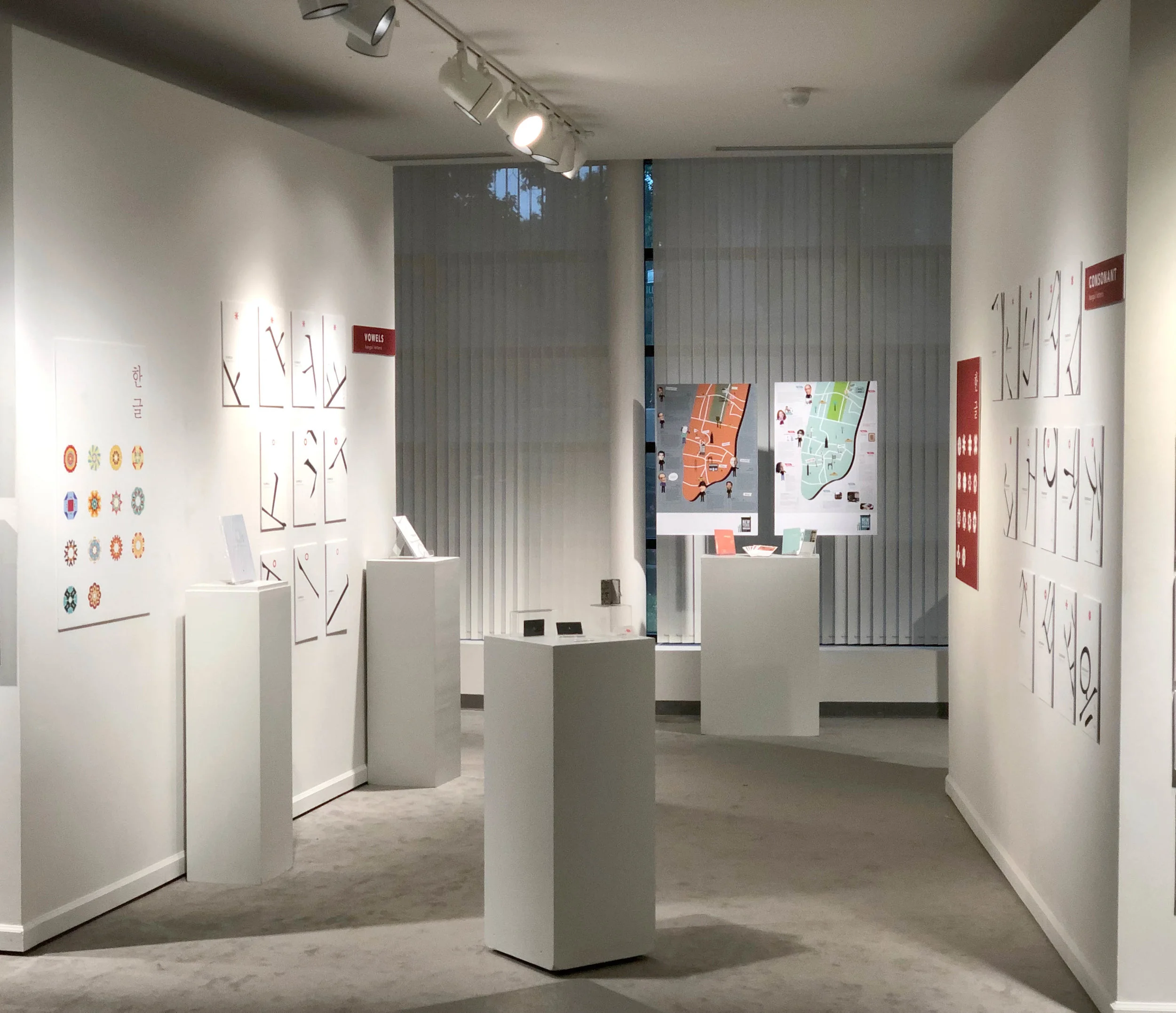
Exhibition
Korean Typography
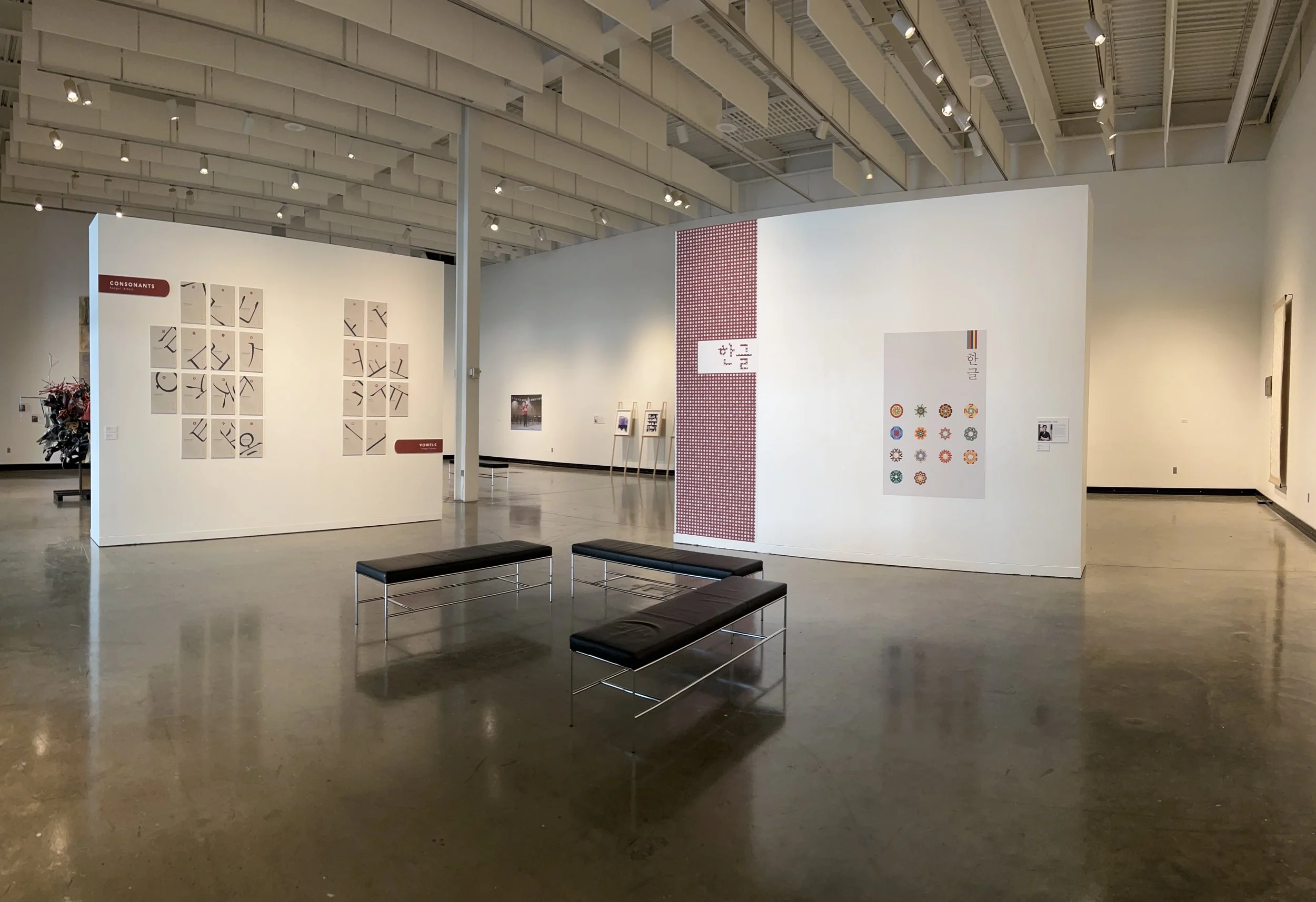
Cho Hyung Gallery, Seoul, 2022
Recognition
Honorable Mention, IDA, 2022
Korean Typography is a body of work that reinterprets Hangul through the visual traditions of Korea, treating the letter as an element that can be composed, patterned, and reconstructed. Made in vector, the series approaches old forms with the tools of contemporary design, and marks the beginning of a longer inquiry into Hangul as designed structure.
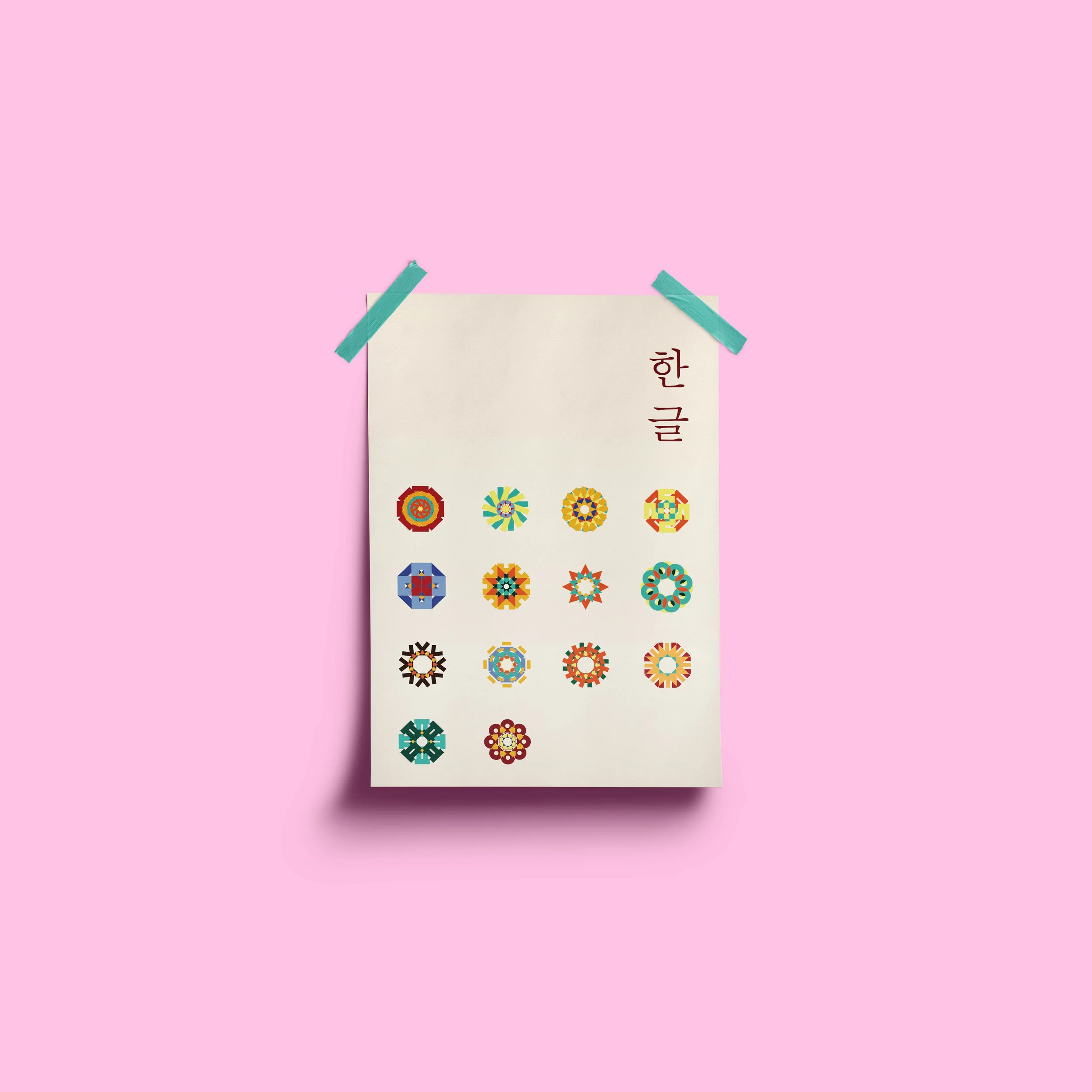
Harmony in Hangeul takes the fourteen basic consonants and ten vowels as units in a generative pattern system. Each letterform is rotated in small, incremental clockwise steps and repeated, so that a single character accumulates into a dense field of ornament. The patterns draw on the visual language of Dancheong, the decorative painting found on traditional Korean architecture, with color layered across the overlapping forms. The system is built by rule: rotation, repetition, and modular assembly.
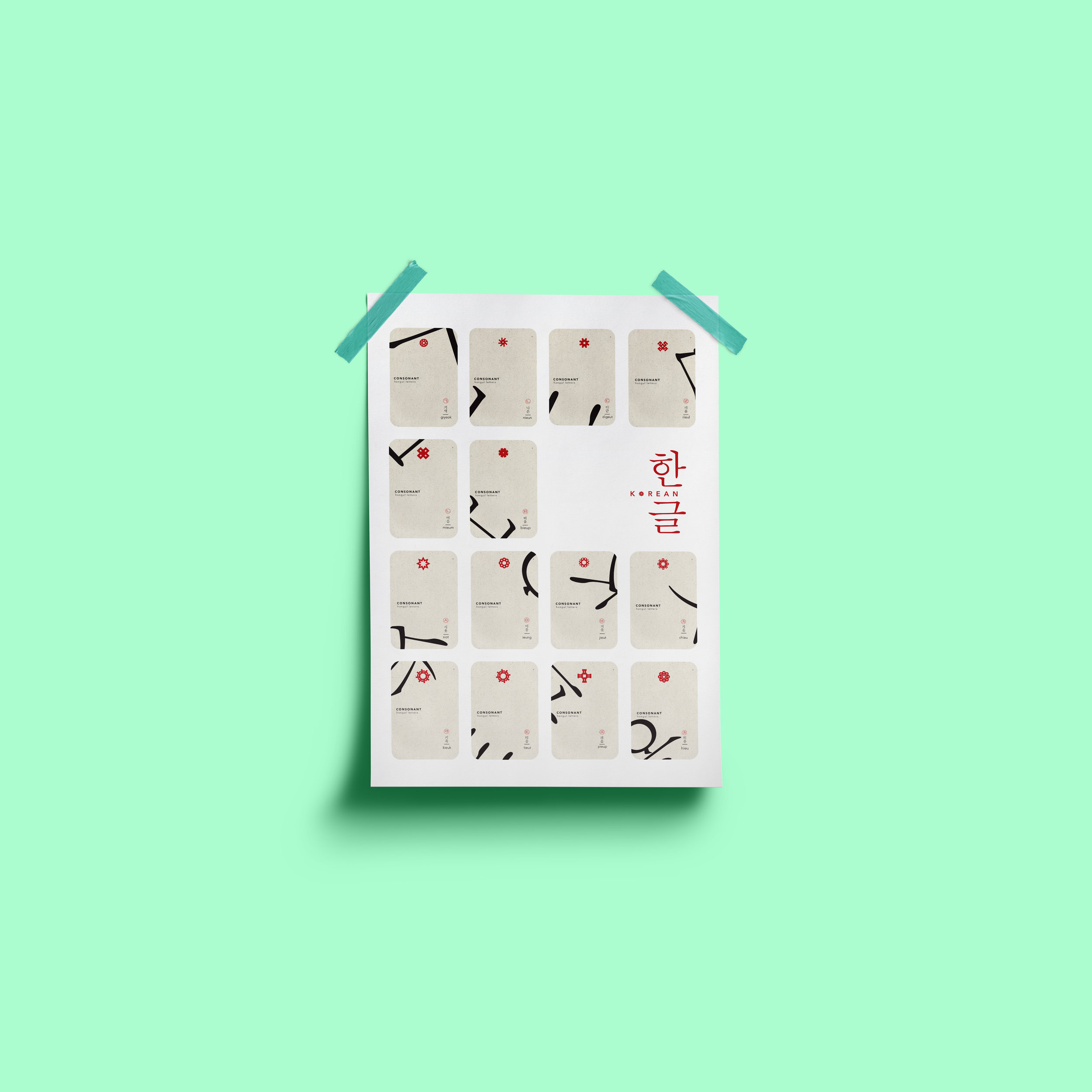
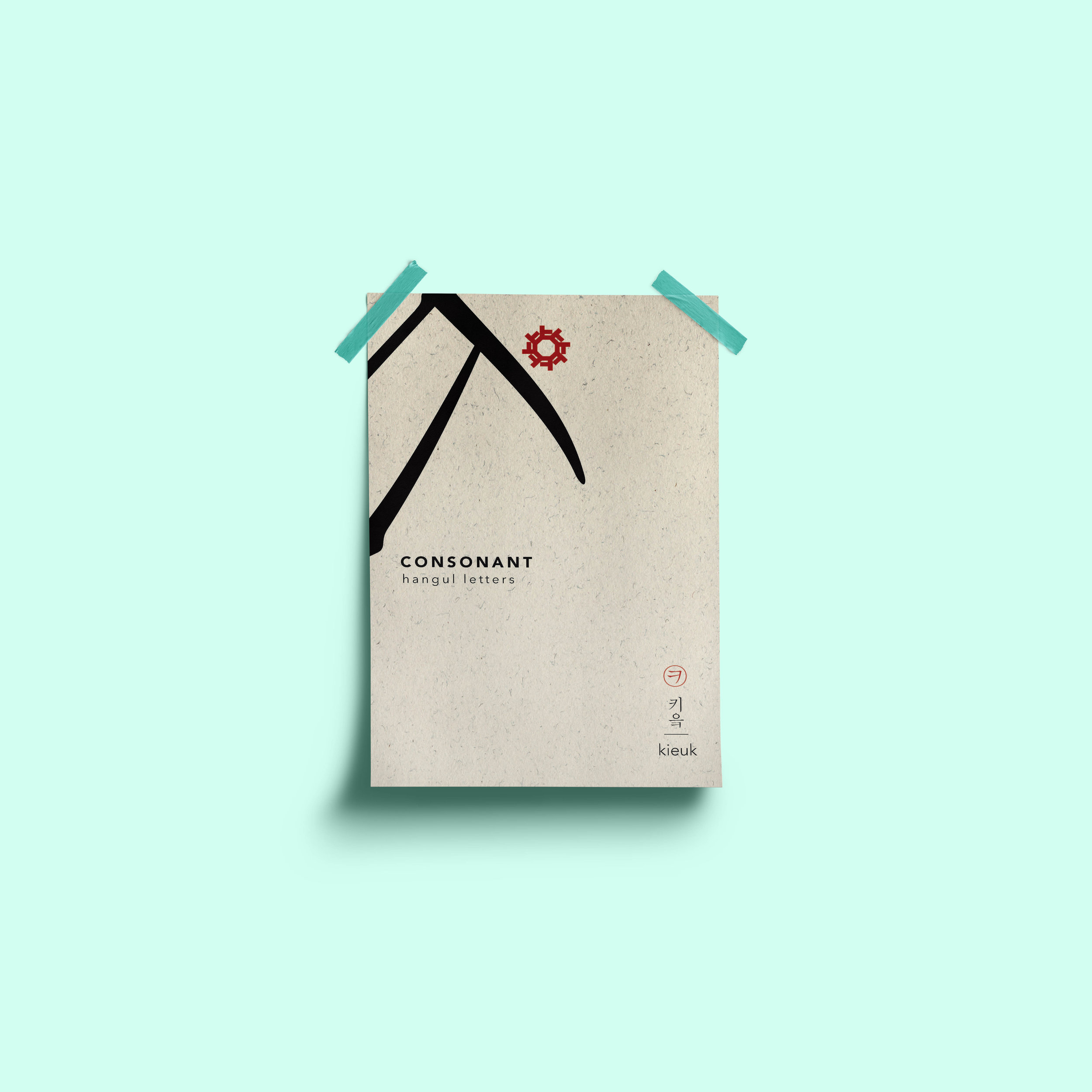
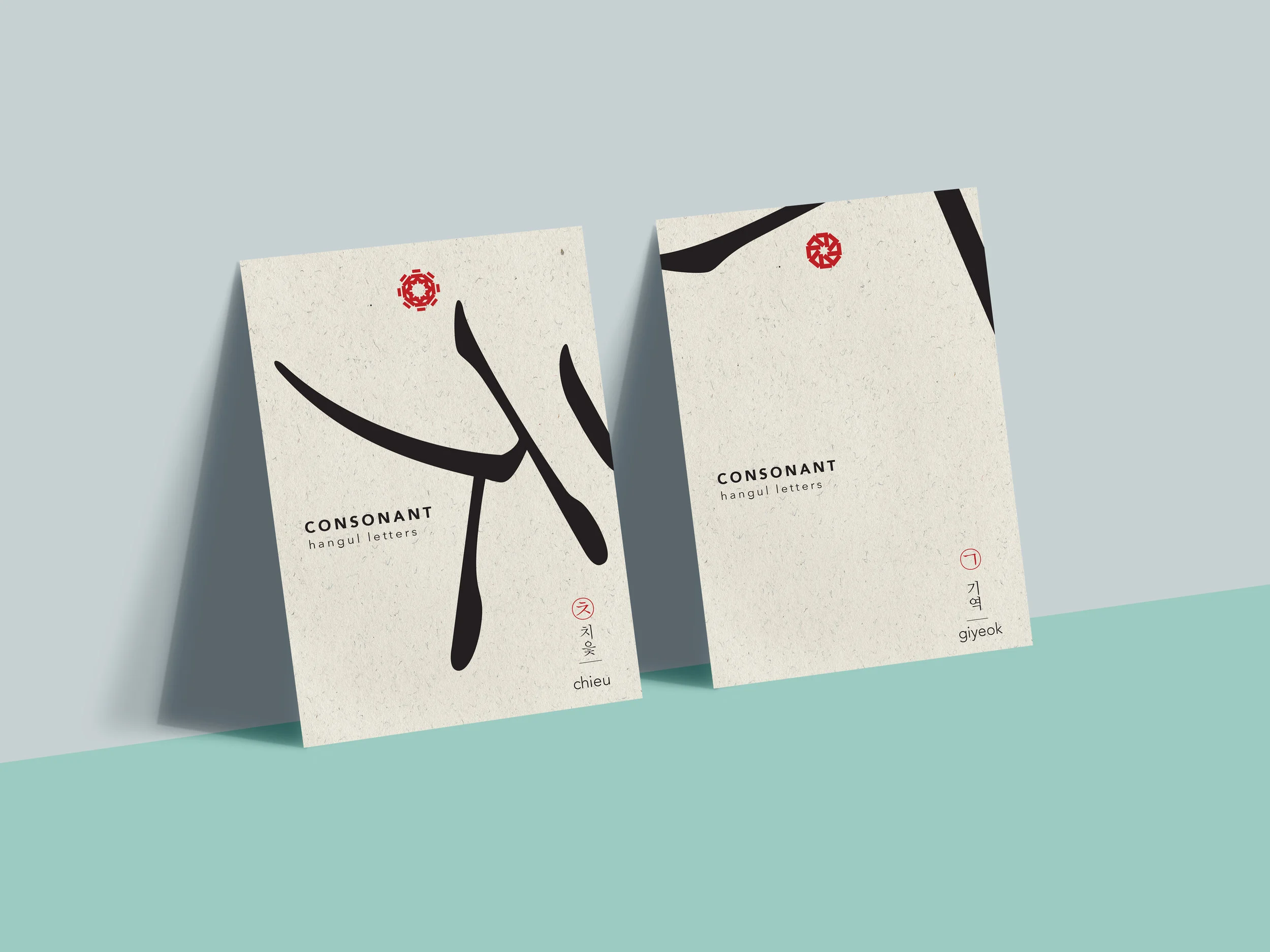
The Beauty of Hangul turns from pattern to memory. Built around Gungseo, the classical Korean calligraphic hand, and set against the texture of hanji, it presents each consonant as a specimen, a single letter held up for study against the strokes of old calligraphy. Where Harmony in Hangeul multiplies the letter into system, The Beauty of Hangul slows down to look at a single tradition of the hand. It received an Honorable Mention at the International Design Awards (IDA, 2022).
Together the two series frame a question that runs through everything that follows. Hangul can be treated as pattern and as inheritance, as system and as memory. The same logic of rotation, repetition, and modular assembly worked out here in vector later moves into generative code. Seen alongside the p5.js work, Korean Typography shows where the inquiry began: the moment the Korean letter stopped being only language and became material for design.